
The Pepsi bottle stands out as one of the most popular and recognizable shapes among all cold drink brands, even distinguishable by touch with closed eyes. This shows how the design of a Product can become its defining characteristic, thereby establishing it as significant intellectual property of the proprietor.
The Designs Act 2000 (“Act”) aims to protect new or original designs intended for specific articles manufactured via industrial methods. People often choose products not just for practical efficiency but also by its appearance. Registering a design ensures that its creator gets proper credit and reward, while also preventing others from copying it for their own commercial purpose.
Meaning of Design:
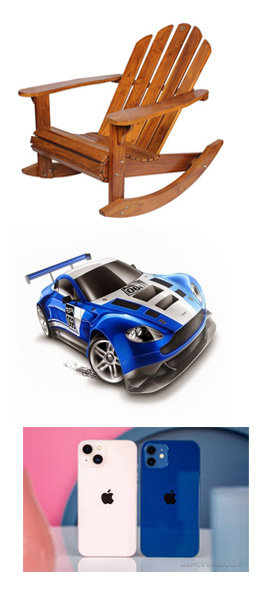
Design refers to the visual features of an article, such as its shape, pattern, ornamentation, or arrangement of lines or colours, whether applied to articles in two or three dimensions, using various industrial processes or methods, whether manual, mechanical or chemical. The appeal of these designs, in their finished state, is judged solely by the eye. However, “design” does not include mechanical devices, trademark, property mark or any artistic work as defined in the Copyright Act, 1957.
Exclusion from the Scope of Design:
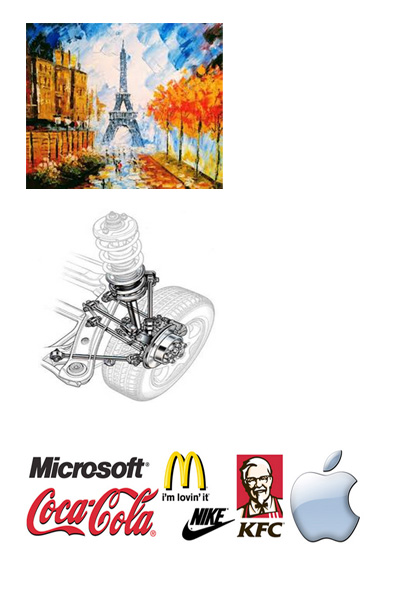
Designs that are primarily literary or artistic character are not protected under the Act. This includes books, calendars, certificates, forms and other documents, dressmaking patterns, greeting cards, stamps, medals, tokens, buildings and structures, parts of articles not manufactured and sold separately, mere change in size of article and flags, emblems or signs of any country.
Design
Not Design [2]
Essential Criteria for Registration:
To qualify for design registration in India, the design must meet certain criteria:
- New or original design
- Not disclosed to the public, anywhere in India or in any other Country, by publication or by use or in any other way, prior to the filing date or priority date
- Substantially different from existing designs or combinations of known designs
- Not contain objectionable or offensive material
- Design should be applied to an article and should appeal to the eye
Proprietor of the Design:
Any individual, legal representative or assignee, either independently or jointly, can file for registration of Industrial Designs. The term “Person” includes firm, partnership, small entities and a body corporations. An application may also be filed through an Agent along with Power of Attorney.
Application for Registration:
- An application shall be filed in Form -1, along with the prescribed fees, stating the details of the applicant, name of the article, class number and address for service in India.
- The application must include four copies of the representation of the design. The representation should consist of exact drawings, photographs, tracings or other representations of the design or specimens of the design. It shall be prepared on white A4 size paper (210 mm X 296.9 mm) of durable quality, but not on cardboard, and should be presented on one side of the paper. The representation should clearly show the features of the design from different views.
- The class to which the article belongs must be mentioned in the application. As per the Designs Rules, 2001, articles are classified in the Third Schedule based on Locarno Classification. There are 31 classes and classes further divided into sub-classes.
For example: Class 1 Foodstuffs: Sub-class 01-06 – Animal Foodstuffs Class 8 Tools & Hardware: Sub-class 08-10 – Bicycle Racks - It should be noted that to register a design in multiple classes, a separate application must be filed for each class.
Process of Design Registration:
Pre-filling Process
Before initiating the registration process, it is advisable to conduct a detailed search to ensure the novelty and distinctiveness of the design. This analysis helps in identifying existing designs that may create difficulties during registration.
Application Filing
The application can be filed in any of the four Patent offices i.e. Patent office Delhi, Mumbai, Chennai or Kolkata. The application should include essential details such as representations of the design, its classification, and information about the applicant.
Formal Examination
Upon receiving the application, the IPO conducts a formal examination to verify compliance with procedural requirements. Any deficiencies or discrepancies in the application are communicated to the applicant for rectification. The applicant must address the deficiencies within six months from the date of communication.
Substantive Examination
Following the formal examination, the design undergoes substantive examination to assess its novelty and originality. If the design meets the criteria for registration and does not conflict with existing designs, the IPO proceeds with the registration process.
Publication and Opposition
After acceptance of the application, the design is published in the Patent office Journal. Within a period of four months from the date of publication, any aggrieved parties can file oppositions, challenging the registration on grounds such as lack of novelty or prior rights.
Registration and Renewal
If no oppositions are filed or successfully overcome, the design is registered, and a certificate of registration is issued to the Applicant. The registration remains valid for a period of ten years, renewable for subsequent periods of five years.
Piracy of Registered Design:
Once the design is registered, the proprietor gains exclusive right to use the design and prevent others from making, using or selling articles that infringe upon the registered design. Piracy of a design refers to the unauthorized application of a design or its imitation to any article within the class of articles for which the design is registered, with the intent to sell or import such articles without the written consent of the registered owner.
Under the Act, the proprietor has two remedies available against the piracy of registered designs:
| Remedy 1 | Remedy 2 |
| If any person commits piracy of a registered design, he shall be liable to pay a sum not exceeding twenty thousand rupees. However, the total sum recoverable in respect of any one design shall not exceed fifty thousand rupees. | The registered proprietor may file a suit for the recovery of the damages for any such contravention and for injunction against repetition of the same. The suit for infringement, recovery of damage etc should be filed before the court of District Judge. |
Case Study : TTK Prestige LTD Vs. Gupta Light House, CS(comm) 865 of 2022
In this case, Prestige pleaded infringement by the defendant of its design of a cooker, registered under Registration No. 197906 by the Design Office in the Patent Office.
Fact: Prestige contended that the defendant’s products closely resemble the registered design. The defendant argued that the suit design lacked novelty and originality, asserting that it is based on a pre-existing design of a traditional Indian cooking vessel called a Handi.
Held: The Delhi High Court rejected the defendant’s claims of lack of novelty, originality, and functionality. It was found that the suit design possesses aesthetic appeal and is entitled to registration. Moreover, the court noted that the suit design had expired by the time of the judgment. However, the court ruled in favor of the plaintiff on the issue of design piracy and ordered the defendant to provide an account of earnings from sales of products bearing the infringing design. The Court decreed the suit and directed the defendant to provide the account of earnings and awarded costs to the plaintiff.
Cancellation of Design:
Any person may file a petition for cancellation of a registered design in the prescribed form at any time after the registration of design on any of the following grounds:
- The design has been previously registered in India
- It has been published in India or in any other country prior to the date of registration.
- The design is not a new or original.
- The design is not registrable under the Act .
- It is not a design as defined under Section 2(d) of the Act.
Conclusion
The registration of design serves as a vital step in safeguarding owner’s brand identity and staying ahead in the market. Moreover, as highlighted earlier, registration cannot be secured if the design is published or used in any other manner before applying for registration. Apart from this, if an unregistered design is applied or reproduced more than 50 times, it also loses its relative/alternative protection under Copyright Act 1957. Thus, registration of design is important to protect unauthorised use of design. By securing legal protection for a unique design, owners establish exclusive rights that prevent unauthorized use or imitation by others. Furthermore, the registration of a design provides a solid foundation for legal recourse in case of infringement, enabling the proprietor to defend their intellectual property rights effectively. Therefore, registering the proprietor’s design is a smart move to secure the future of their brand.
- The article reflects the general work of the author on the date of publication and the views expressed are personal. No reader should act on any statement contained herein without seeking detailed professional advice.
- The images used in this slide are for educational purpose only
For any feedback or response on this article, the authors can be reached on charusheela.vispute@ynzgroup.co.in and kedar.gurjar@ynzgroup.co.in

Author : Charusheela Vispute
Charusheela is heading Estate planning and trademark, having specialisation in property and testamentary matters. By qualification she is Bachelor of Arts and Bachelor of Law from Mumbai University.

Co-Author : Kedar Gurjar
Kedar is an Associate at YNZ Legal. By qualification he is Bachelor of Commerce and Bachelor of Law from G. J. Advani Law college, Bandra, Mumbai University.