
In today’s business world[1], partnerships and strategic alliances are essential. Yet sometimes these are built on vague or poorly drafted contracts.When a contract is unenforceable, it’s not just the parties that suffer — there is a ripple effect that impacts timelines, capital, and sometimes even investor confidence.
The World Bank uses “enforcing contracts” as a key benchmark in assessing a country’s Ease of Doing Business[2]. It’s a recognition that robust, enforceable agreements are foundational to a secure and predictable business environment.
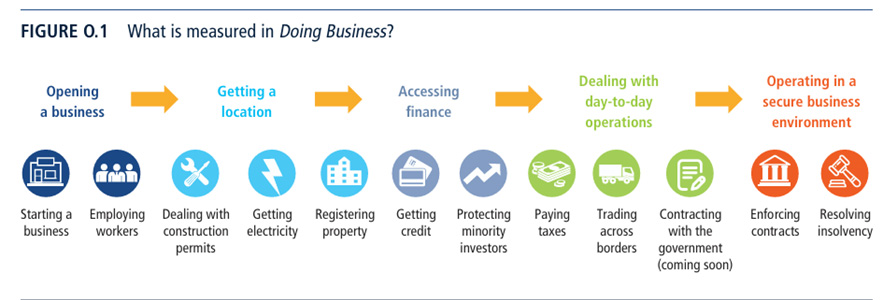
There are many common assumptions about contracts which simply aren’t true — and some can prove costly. If parties take basic precautions, and mark their obligations and rights clearly, the possibilities of dispute can reduce. In this article, we have considered 7 persistent myths about contracts that every business leader should be aware of.
Let us understand a few myths and the actual facts.
Myth No. 1: Contract is formed when signed, sealed and stamped.
KNOW YOUR LAW:
Contract can be formed even through correspondences with respect to moveable and commercial transactions. Courts have repeatedly looked into contracts which are exchanged in emails, WhatsApp communications and letters.
It is important to adhere to formalities and execute contracts properly, as sometimes email confirmations and correspondences can cost dearly, when suddenly, an old confirmation is sought to be enforced by a party through an expensive arbitration abroad. Section 7(4)(b) of the Arbitration Act requires the Court to ask whether a record of agreement is found in the exchange of letters, telex, telegrams, or other means of telecommunication.
Of course, if the transaction involves an immoveable property, then registration of transfer documents is mandatory[3].
CASE REFERENCE:
BELVEDERE RESOURCES DMCC versus OCL IRON AND STEEL LTD & ORS[4] :
In this case, order was placed initially on a supplier through WhatsApp and email communications (which included exchange of general terms and conditions in pdf format- with an arbitration clause).
After the supplier acted on the order, the purchaser wanted to cancel it. The supplier alleged this as wrongful termination and repudiation, as supplier suffered losses of having compelled to resell the contractual cargo to a third party at a lower market price. The supplier dragged the purchaser to arbitration in Singapore and the contract and this arbitration clause was recognized by the Delhi High Court.
Similarly, an arbitration clause contained in invoices is very much enforceable, though the letter of confirmation provided by purchaser, may or may not contain arbitration clause- Sanjiv Manmohan Gupta Versus Sai Estate Consultants Chembur Pvt. Ltd[5].
The purchaser’s challenge to arbitration clause was negated by the Bombay High Court (after two years of waiting period) and the Court said, “The invoices were accepted and partly paid for, without challenging the arbitration clause in them. Multiple opportunities to question the arbitration clause were available – each time an invoice was raised. Even if the invoices were received subject to verification, they were indeed paid for initially without any protest about the arbitration agreement.”
Myth No. 2: Contract is a standard paper to be signed as a formality, and business can work differently.
KNOW YOUR LAW:
Intention of the parties is of utmost importance in commercial aspects. A well recorded document which reflects intentions of the parties through proper recitals and clauses has a great evidentiary value in cases of disputes. In Sale of Goods Act, 1930, there are more than fifteen sections which subject the provision of the Act to the different intention recorded in the contract.[6]
The magical words used in most of these sections are: Unless a different intention appears OR Unless otherwise agreed OR Unless the circumstances of the contract show different intention.
Aspects like implied warranties, rules of delivery, return of rejected products, stipulations about time of payment and many more such aspects, have been specifically made subject to the intention of the parties.
Further, if you have changed any of the obligations, record it. If your business realities change — so must your contracts. Periodic reviews ensure that contracts stay relevant, reflect updated obligations, and help avoid surprises down the line.
Myth No. 3: I can extract anything I want from the other party in a contract- reasonableness doesn’t matter.
KNOW YOUR LAW:
Clauses in contract can be determined by the Courts as unconscionable, unfair, arbitrary and set aside. Just because a party has signed a contract, does not make the entire contract enforceable, if the clauses appear unreasonable.
The landmark case of Central Inland Water Transport Corporation Limited and Another v. Brojo Nath Ganguly and Another [7]has clearly established that the Courts will not enforce an unfair and unreasonable contract or an unfair and unreasonable clause in a contract, entered into between Parties who are not equal in bargaining power.Recently, in Pioneer Urban Land & Infrastructure Ltd. Versus Govindan Raghavan[8], a case involving flat owners and builders, wherein the owners challenged contract through consumer commissions and the matter reached the Apex Court. The Supreme Court held that :
“A term of a contract will not be final and binding if it is shown that the flat purchasers had no option but to sign on the dotted line, on a contract framed by the builder. The contractual terms of the Agreement dated 08.05.2012 are ex-facie one-sided, unfair, and unreasonable. The incorporation of such one-sided clauses in an agreement constitutes an unfair trade practice as per Section 2 (r) of the Consumer Protection Act, 1986 since it adopts unfair methods or practices for the purpose of selling the flats by the Builder.
Myth No. 4: Change of circumstances after contract have no impact on the obligations, and performance must be done irrespective of any changes.
KNOW YOUR LAW:
Section 56 of the Contract Act specifically states that a party cannot be compelled to perform an impossible contract. “es non cogit ad impossibilia” which means that the law will not compel a man to do what he cannot possibly perform.
However, the performance of a contract is never discharged merely because it may become onerous to one of the parties, but it should actually be impossible, and such fact should not be known to the party while entering into the contract.
For example, natural disasters, wars, pandemic, terrorist attacks could be considered a force majeure, but the clause does not apply in a straight jacket manner to one and all. Each case is determined, and the Court will critically examine whether the natural disaster did actually impact performance and make the performance impossible, or simply inconvenient.
Myth No. 5: Contract allows me to use trademark of other party
KNOW YOUR LAW:
It is commonly seen that some service providers proudly display logos of reputed brands displayed on their website as their clients. What most people don’t consider is that the brand/trademark of the client is an intellectual property owned by the client and other service providers are not authorized to use them unless otherwise agreed via a formally executed trademark licencing agreement.
Unauthorized use of such marks can lead a business into infringement cases and a long-strained litigation. The marketing gimmick can soon turn into a legal nightmare.
Even though a contract with client may demonstrate some alliance or collaboration with another party, it does not grant any implied right with respect to other party’s IPR. Trademark and logo usage needs to be consented to by the owner specifically. If you want to use your customer or partner’s logo, incorporate specific permission in the agreement to avoid misunderstandings.
Inappropriate use of your client’s or any third party’s registered trademark or a mark which is identical, confusingly similar, deceptively similar to that of a third party can plunge you down in a infringement case under section 29 of Trademarks Act 1999. Even if the mark is not registered trademark a passing off suit under common law can be filed against you.
Myth No. 6: I have to pay something for promise to be enforceable
KNOW YOUR LAW:
While valid consideration is essential for an agreement, a reciprocal promise or obligation is also recognized as valid consideration. Absence of monetary consideration does not make the contract unenforceable, and existence of a reciprocal promise serves as a consideration to the other party. Non-disclosure Agreements are the best examples, wherein confidentiality obligation can be enforced irrespective or exchange of monetary consideration amongst the parties. In Unilateral NDAs even if only one party is disclosing information, the receiving party often receives something of value, such as access to confidential business data, trade secrets, or an opportunity and under mutual NDAs both parties agree not to disclose each other’s information, this mutual promise itself is valid consideration.
One must remember that consideration, in legal terms, should not be equated solely with monetary compensation. Agreements entered into out of natural love affection such as gift deed, are recognized and monetary consideration is not a requisite for enforcement.
Myth No. 7: Objectives of a contract do not matter, and I can contract for anything.
KNOW YOUR LAW:
Contract Act clearly defines that objects of a contract matter and any contract made for objectives which are illegal or against the public policy will be void. Off late, due to delay in judicial enforcements, many parties include clauses to state that any proceedings filed beyond a fixed period are not to be entertained or that parties will not litigate on this matter. These might restrain legal rights of a party and however logical it may seem is not enforceable. Further, the period within which the legal action can be filed is determined by the limitation statute and cannot be altered by the parties, extension or reduction, both are not possible.
In fact, The Indian Contract Act 1872 clearly states that below set of agreement would be considered void:
- Agreements that are without Consideration
- Agreements which are in Restraint of Marriage
- Agreements which are in Restraint of Trade, with some exceptions (like sale of goodwill).
- Agreements which defeat the provisions of any law;
- Wagering Agreements: Section 30: Agreements based on wagering (bets) are void. (Note: They are void, not illegal, unless local laws make them so.
Conclusion
While myths often stem from hearsay, casual understanding and outdated practices, relying on them can lead to costly mistakes, losses and strained partnerships. In a world where business transactions are becoming increasingly complex and interconnected, a well-drafted contract is not a barrier to flexibility, but a tool to enable it thoughtfully and transparently. As professionals, it’s time we move beyond assumptions and treat contracts not as burdens, but as strategic instrument of achieving a decided outcome.
- The article reflects general work of the authors, and the views expressed are personal. No reader should act on any statement contained herein without seeking detailed professional advice.
- *Doing Business 2020
- More information can be found https://www.linkedin.com/posts/charusheela-vispute-224576ab_immovable-property-transfer-ugcPost-7348647559482990594-Uick? utm_source=share&utm_medium=member_desktop&rcm=ACoAAAWNk1UB_BXaT6jMIQ7i6DIvSIVi 9EQy11U
- O.M.P.(I) (COMM.) 397/2024, CRL.M.A. 9760/2025, I.A. 2377 78/2025
- Bombay High Court : COMMERCIAL ARBITRATION APPLICATION NO. 458 OF 2024
- For more information, refer: Microsoft Word – 5-Intention of Parties_Sale of Goods Act Article 4.docx
- (1986) 3 SCC 156
- Supreme Court: CIVIL APPEAL NO. 12238 OF 2018
For any feedback or response on this article, the authors can be reached on aarti.banerjee@ynzgroup.co.in and kedar.gurjar@ynzgroup.co.in

Author : Aarti Banerjee
Aarti is a Partner- Corporate Legal Advisory. Aarti is experienced in corporate legal matters having specialization in drafting, vetting and negotiation of agreements. By qualification she is an Advocate and a Solicitor.

Co-Author : Kedar Gurjar
Kedar is an Associate at YNZ Legal. By qualification he is Bachelor of Commerce and Bachelor of Law from G.J. Advani Law college, Bandra, Mumbai University.