
Introduction:
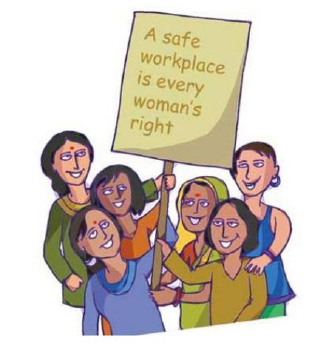
Sexual Harassment at workplace is a nightmare for any working woman. ‘Any working woman’ includes a casual worker, an intern, a volunteer, a domestic worker, a consultant and also a woman working at very high position in any organisation. To ensure protection of women at workplace from such harassment cases, the government enacted The Prevention of Sexual Harassment of Women at Workplace (Prevention, Prohibition, and Redressal) Act, 2013 (“POSH Act”).
According to a survey in 2019, India ranked highest in the list of dangerous countries for women. This comes as no surprise, with over 400 thousand reported crimes against women in that year alone.[1]
As per the analysis survey conducted by “The Analysis” (TA) on anti-sexual harassment laws. Almost 57% women answered in affirmative of having been sexually harassed in some form at their workplace or institution or at home in the survey. Moreover, around 87% women never reported such instances of sexual harassment to any authority due to fear of losing the job or risking their own life.
This demonstrates the unfortunate situation that though women suffer from sexual harassment at workplace, they are unable to file a complaint due to various possible reasons like lack of knowledge lack of awareness about ICC/LC, non availability of ICC/LC etc.
History:
In the year of 1979, a Convention on the Elimination of All Forms of Discrimination Against Women (CEDAW) was adopted by the United Nations. This was considered as an international guideline for elimination of any kinds of discrimination against women. India had signed this CEDAW on 30th July 1980.[3]
After signing the CEDAW, though the legislature did not pass any specific legislation the judiciary heard the voice raised by a social worker by the name of Bhanwari Devi, who was gang raped while performing her duty and laid down detailed guidelines, widely known as the Vishakha Guidelines, after lapse of almost seventeen (17) years.
Later on, these Vishakha Guidelines were implemented by the legislature with the enactment of The Prevention of Sexual Harassment at Workplace (Prevention, Prohibition, and Redressal) Act, 2013. This year we have completed a period of 10 years after enforcement of this Act.
Applicability:
The POSH Act provides protection and redressal system to the women working at Workplaces and specifically provides that:
- Where more than 10 employees are working, the Employer is required to establish an Internal Complaint Committee, a committee formed on the organisation level and has powers equivalent to that of a civil court.
- Where less than 10 employees are working i.e. unorganised sector, a Local Complaint Committee, a committee needs to be formed on the district level and has powers equivalent to that of a civil court.
Workplace:
As the provisions of POSH Act specifically protects women working at WORKPLACE, let us see What is WORKPLACE?
As per Section 2(o) of the POSH Act “Workplace” as follows:
- Any department, organisation, undertaking, establishment, enterprise, institution, office, branch or unit which is established, owned, controlled or wholly or substantially financed by funds provided directly or indirectly by the appropriate government or the local authority or a government company or a corporation or a co-operative society.
- Any private sector organisation or a private venture, undertaking, enterprise, institution, establishment, society, trust, non-governmental organisation, unit or service provider carrying on commercial, professional, vocational, educational, entertainmental, industrial, health services or financial activities including production, supply, sale, distribution or service.
- Hospitals or nursing homes
- Any sports institute, stadium, sports complex or competition or games venue, whether residential or not used for training, sports or other activities relating thereto.
- Any place visited by the employee arising out of or during the course of employment including transportation by the employer for undertaking such journey.
- A dwelling place or a house.
Section 2(p) of the POSH Act, 2013 provides for definition of “unorganised Sector” in relation to a Workplace means an enterprise owned by individuals or self-employed workers and engaged in the production or sale of goods or providing service of any kind whatsoever, and where the enterprise employs workers, the number of such workers is less than 10.
Obstacles in Implementation of the Act:
The sole motive of enactment of the POSH Act is to address and prevent the sexual harassment in workplace. However, the provisions of this Act have not yet reached the public at large. This non availability has made the stringent provisions and effective complaint resolution process not effective, resulting into failure in providing safe and respectful environment for women across all sectors.
POSH Act is applicable across the sectors and for all the types of organisations. However, it is often seen that while it is easy to implement the POSH ACT in an organisational setup such as a company in metros, there is considerable difficulty that is faced by certain informal institutions such as trade associations, coaching classes, business networking organizations, educational institutions, film production sets, where there is a huge gathering of the crowds.
The difficulty arises due to various factors and sometimes may be attributed to the fact that most contributors in these organisations are not employed but working voluntarily or working from home or extended workplaces through consultancy or informal engagements. The implementation of POSH is a huge challenge in such cases. Let us analyse some recent examples.
Federations:
In this year, the sad state of federations was highlighted by a case where allegations of sexual harassment was levelled by some of the nation’s top wrestlers against Wrestling Federation of India Chief Mr. Brij Bhushan Sharan Singh. It was observed that there was no ICC, as mandated by POSH Act. The protest was called off, as the government promised to take action and accordingly, a committee was appointed, and the matter is not pending before the concerned committee. It remains to be seen whether the national and international champions of wrestling have to still wrestle against the government for their basic human rights.
Hon. Supreme Court observed various lacunas in the implementation of the POSH Act in the matter of Aureliano Fernandes Vs State of Goa and Others[4] , and stated that: “It is disquieting to note that there are serious lapses in the enforcement of the Act even after such a long passage of time. The National daily newspaper has conducted and published a survey of 30 national sports federations in the country and reported that 16 out of them have not constituted an ICC till date. Where the ICC have been found to be in place, they do not have the stipulated number of members or lack the mandatory external member. This is indeed a sorry state of affairs and reflects poorly on all the State functionaries, public authorities, private undertakings, organizations and institutions that are duty bound to implement the PoSH Act in letter and spirit.”
Institutions:
In another recent case, students at a reputed Dance Institute, specifically Kalashetra[5] at Chennai, has brought this whole issue to limelight again[6] . In the said case, a group of students have filed a case for formulation of proper safety policies and again same situation was observed that ICC was not formed. In December 2022, one of the ex-directors of the institute had posted on social media that one male teacher was sexually harassing and molesting the students. After this post, many students have come together to in support of this claim and are sharing stories online. But the person accused was found to be not guilty and was reinstated. A notice was published on the online website of the college, which forbade the students from discussion of the incident. A police complaint was filed by students, and one teacher was also arrested. The students have averred that the institute has not taken the cognisance of the complaint and have tried to supress their voice.
The National commission of Women have also directed the police to file a complaint on the teacher for the sexual harassment,
but the case was closed citing that the complainants have retracted their complaints.
Kalakshetra Foundation, after the allegations has issued a press statement denying all the allegations and repeating its stand with respect to the investigations and compliance by the internal complaints committee. Students had protested demanding the suspension of the professor and had boycotted examinations.
The police had registered the complaint against one of the faculty members- Hari Padman, and he was arrested on 3rd April 2023, after a former students filed a complaint against him. The Board of Kalakshetra after the arrest suspended the former professor Hari Padman. He was granted bail in the case on 3rd June 2023.
This case has brought forward a huge #Metoo movement in the field of arts and other institutions, where sexual harassment seems rampant, but the victims do not come forward, against the abuser.
AURELIANO FERNANDES VS STATE OF GOA :
The Supreme Court has lamented on the sorry state of affairs with respect to the implementation of the POSH Act in the latest judgement of Aureliano Fernandes Vs State of Goa[7] . The Honourable Court observed that the implementation of POSH Act is in letters only and not in spirit, which is reflecting poorly on government departments, public and private organisations, undertakings, and all the organisations bound to implement POSH Act.
There is a huge disparity between the law stated on paper and implemented in facts. It has urged that every organisation needs to follow the law in spirit and implement the documented procedures.
The Hon. Supreme Court expressed its displeasure over non implementation of the POSH Act and policies by government authorities, private and public entities. Thus, it has laid down specific guidelines and instructed the central and state governments to undertake timebound exercise to ensure that various institutions, Departments, Government organisations, authorities, Public Sector The Hon. Supreme Court expressed its displeasure over non implementation of the POSH Act and policies by government authorities, private and public entities. Thus, it has laid down specific guidelines and instructed the central and state governments to undertake timebound exercise to ensure that various institutions, Departments, Government organisations, authorities, Public Sector Undertakings, bodies have a properly constituted ICC under the provisions of POSH Act and necessary information is available to the working woman regarding the ICC, registration of the complaint, procedure of complaint redressal etc. Hon. Court also took cognisance that even the statutory bodies of professionals such as doctors, lawyers, architects, chartered accountants are implementing the POSH Act at their workplaces. Training and orientation programmes to educate the employees and members is an integral part of this process and without which the ignorance of law will always prevail. Hence educating employees about the provision of POSH Act is very important and by imparting training in timely intervals will definitely help to increase awareness about the provisions of the POSH Act.
Conclusion:
This law is a preventive and protective statute, to uplift the women, and to enable them to engage in work unhindered by any sexual predators and it is but natural, that the workplaces should adhere to the law in letter and spirit.
Organisations should consider this as a moral responsibility, and not another compliance checkbox to tick. Some best practices to be followed:
- proper awareness programs on a regular basis.
- Regular trainings regarding POSH to its employees, staff, students and volunteers and ICC.
- The workplaces including unorganised sectors should adopt comprehensive policies.
- A proper committee should be formed by the organizations to ensure that proper redressal mechanism is available.
- There should be accountability of actions of each person in the organisation.
By adopting these measures, institutions can create a safe and inclusive environment conducive to learning and growth.
Recognizing the potential risks and taking proactive measures to prevent sexual harassment not only fulfils legal obligations but also promotes the overall well-being of everyone involved. With concerted efforts, the institutes can nurture talent and can play a significant role in shaping a society that values respect, equality, and dignity, empowering students to reach their full potential without fear or discrimination.
- This article reflects the general work of the author and the views expressed are personal. No reader should act on any statement contained herein without seeking detailed professional advice..
- https://www.statista.com/statistics/633412/reported-cases-women-harassmen-india/
- https://tbinternet.ohchr.org/_layouts/15/TreatyBodyExternal/Treaty.aspx?Treaty=CEDAW&Lang=en
- MANU/SC/0572/2023
- https://narthaki.com/imgs/apr23/kalakshetra_controversy.html
- Madras High Court WP No. 11764 of 2023 and WMP No. 11647 of 2023
- MANU/SC/0572/2023
For any feedback or response on this article, the authors can be reached on ashvini.kandalgaonkar@ynzgroup.co.in and shruti.kulkarni@ynzgroup.co.in

Author : Ashvini Kandalgaonkar
Head- Corporate Legal Advisory, is experienced in Corporate litigation and non- litigation. She is also into drafting, reviewing and negotiating commercial contracts, HR Documents and a member of ICC committee for various clients. By qualification she is Bachelor of Legal Science and Bachelor of Legislative Law ( B. L. S. LL. B) from Mumbai University.

Co-Author : Shruti Kulkarni
Shruti is an associate at YNZ Legal and has completed her Masters of Commerce from Pune University and Bachelor of Law from ILS Law College, Pune. She works predominantly into drafting and reviewing of commercial contracts and handles Trademarks. She is also a member of Bar council of Maharashtra and Goa.