
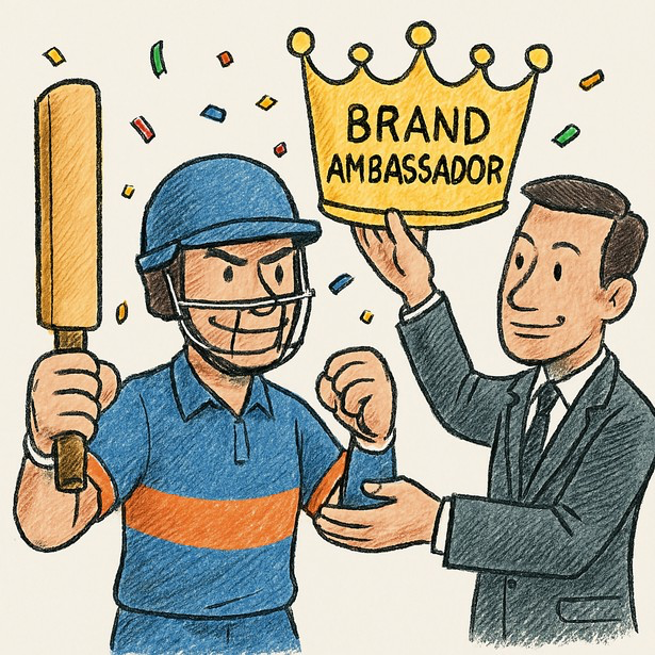
The landscape of professional sports has undergone a seismic shift.[1] We are no longer in an era where an athlete’s success is measured solely by trophies and medals; sometimes it is also measured in brand value, reputation, and contractual discipline. Today, the playing field extends deep into the boardroom. Global brands are increasingly aggressive in their pursuit of sporting legends, transforming icons into “brand ambassadors” who carry the weight of multi-million-dollar identities on their shoulders.
When these partnerships align, the results are spectacular. Take Cristiano Ronaldo’s landmark deal with WHOOP, a high-performance wearable technology company that tracks recovery, sleep, and strain. As an athlete famous for his near-obsessive focus on longevity and fitness, Ronaldo’s partnership is more than a commercial, it is a lifestyle integration that saw him transition from a long-time user of the device to a global ambassador and major investor[2]. Similarly, we see Real Madrid’s young sensation Jude Bellingham being officially appointed as a “Friend of the House” for Louis Vuitton[3], solidifying his status as a luxury fashion icon alongside his Real Madrid heroics. In these instances, the athlete becomes a business mascot, and the brand gains a level of cultural currency that traditional advertising may struggle to create in short period of time.
But how many times do we see an elite athlete accidentally get trapped in the fine print of these deals, only for a single unnoticed action to bring down the entire deal?
The Price of a Slip-Up: Real-World Lessons
Even the most seasoned professionals can find themselves in the crosshairs of a legal dispute due to a momentary lapse in “legal framework discipline.” These incidents often lead to significant financial penalties and strained relationships with governing bodies.
- The Shubman Gill Nike Vest Incident (2025)[4]: While captaining India in the 2025 Edgbaston Test, Shubman Gill was spotted wearing a visible Nike inner vest while declaring the innings. This sparked immediate controversy as Adidas is the official BCCI kit sponsor in a landmark five-year deal. Since Nike is a direct global competitor, the visual of the Indian captain sporting a rival logo during an official match highlighted the volatile intersection of personal endorsements and team obligations.
- Upon joining Bayern Munich, England captain Harry Kane had to navigate a strict corporate-sponsor environment[5]. One of Bayern’s sponsor Audi is also a shareholder in the club. Consequently, every Bayern player is supposed to drive an Audi (or a brand within the Volkswagen Group, such as Bentley) whenever they are on official duty. Official duty includes driving to and from the training ground, arriving at the stadium for matches, and attending any club-sanctioned events. Players can drive personal cars in their private time. For instance, Kane’s teammate, Kingsley Coman, previously faced heavy fines and was forced to record a public apology simply for showing up to training in a Mercedes. To avoid a similar legal and financial headache, Kane was required to select a new Audi company car immediately upon his arrival in Munich.
It is clear from these cases that during official matches and team-controlled environments, team sponsorship obligations typically override an athlete’s personal endorsement rights, irrespective of intent or visibility. Even incidental exposure can constitute a breach.
Dos and Don’ts: The Legal Playbook
To ace the complex intersection of sports and commerce, athletes should treat their endorsement contracts with the same rigor they apply to their training. Here are a few of many “Do’s and Don’ts” that serve as a strategic roadmap that dictates whether a partnership remains a lucrative success or collapses into a minefield of legal troubles.
✅
Follow Code of Conduct of Regulatory Bodies:
Every sport has a governing body (e.g., BCCI, FIFA, IOC) with Participation Agreements that often contain restrictive marketing clauses. Athletes should meticulously read and follow the Code of Conduct of their sport’s governing body or the specific tournament they are playing to align obligations with personal endorsement practices. This ensures that a brand moment on social media or in public doesn’t create a conflict of interest or a breach of governing body rules.
Ensure Termination Rights:
Contracts should not be one-way streets. Athletes as well as brands should negotiate Without Cause termination notice periods and Material Breach clauses that allow exit if the other party fails to perform or undergoes a bankruptcy that could tarnish the association.
Define Exclusivity Narrowly:
A broad ban on sportswear can kill future deals. Athletes should ensure that product category is precisely defined. For e.g., “Performance Running Shoes” instead of just “Footwear”. This may reserve athlete’s right to sign with a luxury shoe brand or a formal wear company.
Specific Territory and Jurisdiction:
Territory is where the advertisements appear, but jurisdiction is where the legal battle happens. A common legal trap is granting a global license for a local fee. It is important that licensed territory is clearly defined to ensure athlete’s market value is protected in other regions.
Due Diligence on Product Claims:
Under the Consumer Protection Act, 2019[6], an athlete (endorser) can be held personally liable for endorsing a misleading product-
- Section 21(2) empowers the CCPA to impose penalties of up to Rs 10 lakh (rising to Rs 50 lakh for repeat offenses).
- Section 21(3) can prohibit an athlete from endorsing any product for up to three years.
- Under Section 21(5), an endorser is exempt from these penalties only if they can prove they exercised “due diligence” to verify the truth of the brand’s claims
Thus, athletes should ensure the contract includes a “Representations and Warranties” clause where the brand certifies its claims, backed by a strong Indemnity Clause to cover all legal costs and fines arising out of such claims.
Injury Protection Provisions:
A career-threatening injury shouldn’t lead to a total loss of endorsement income. An injury often prevents an athlete from fulfilling active duties like playing in televised matches or attending promotional shoots which can trigger non-performance penalties or even termination by the brand. Properly articulated Injury Protection provisions that may fetch the athlete percentage of the fee even if athlete is out of action, ensuring the contract stays active during recovery.
Image Rights and Ownership:
Ensure the contract explicitly states that all Intellectual Property (IP) in name, likeness, and voice remains athlete’s sole property, and the brand only has a Limited, Non-Transferable License for the term of the deal.
❌
Vague Scope of Work:
Phrases like “reasonable appearances” are a recipe for disaster. Athletes as well as brands should agree on a clear Deliverables Schedule that specifies exact numbers. For e.g. 4 days of shooting, 8 Instagram posts, and 2 public appearances in a month. Anything extra must trigger additional brand representation fees.
Post Termination Usage:
Some brands continue using an athlete’s face long after the money stops flowing. There should be a Hard Stop date for all digital assets and a limited Sell-off Period like 60-90 days for physical merchandise, after which the brand must destroy all remaining materials.
Neglecting AI related risk:
In the era of Deepfakes, digital identity is at risk. It may be helpful to explicitly prohibit the use of Generative AI to recreate athlete’s image or voice. Any AI usage must be treated at additional commercials.
Including Automatic Renewal:
Some contracts include automatic renewal provisions that allow the brand to extend the deal unilaterally. In such a scenario, athletes might get stuck with brands for years at a lower market rate, preventing them from moving to a more prestigious or higher-paying endorsement. Athletes should insist on mutual consent for renewals.
Ignorance of Conflict of Interest:
Sometimes an athlete’s team may be sponsored by a betting brand and the athlete may personally oppose gambling. Athletes should carve out for themselves specific exceptions through conflict of interest provisions that allow such athlete to opt-out of specific team activities that directly clash with such athlete’s personal brand values or existing endorsements. For instance, Real Madrid’s star forward Kylian Mbappé famously refused to participate in a French National Team photoshoot because he did not want his image associated with the team’s official partners, including fast-food chains and betting companies. His stance forced the French Football Federation to revise their player image rights agreement to allow players a greater say in which brands they are contractually forced to endorse through the team.[7]
Allowing right of sub-licensing:
Brands often insert a clause allowing them to sublicense or assign athlete’s image to their affiliates or partners. Athletes should not allow unrestricted sublicensing. The contract should state that the license is non-transferable and any use by a third party requires athlete’s express, written consent.
Missing out on Blackout Periods:
Major Leagues and tournaments (like during the World Cup or Olympics) often have exclusive windows called blackout period wherein athletes are required to promote only sponsor brands of such leagues or tournaments. Athletes should avoid signing contracts that promise year round visibility without carving out these mandatory blackout dates to avoid fines from governing bodies of such leagues or tournaments.
Can you find legal keys to the following endorsement locks?
Whether you are on the athlete’s side or representing a global brand, the following scenarios are real-world friction points where millions of dollars are won or lost:
Scenario 1- The Team Bus Dilemma: A star cricketer is traveling with his team in the official bus from the hotel to the stadium for a high-profile match. He is seen wearing a luxury fashion hoodie from a brand he personally endorses, while the team’s official kit sponsor is a rival sportswear giant. Can he wear his personal brand, or must he wear the team’s sponsor?
The Key: This depends entirely on the “Travel Wear” and “Official Appearance” clauses in the contract between the governing body and the team sponsor. Generally, the moment an athlete enters a “team environment” (like the official bus, hotel lobby for meetings, or the dugout), they are considered to be in “official capacity” and must wear only team-approved sponsors. Using personal fashion here is often a breach that invites penalties from the governing body.
Scenario 2- The “Background” Social Media Slip: An athlete posts a “Day in my Life” workout video on Instagram. In the corner of the home gym, a rival brand’s energy drink is sitting on a table. The athlete doesn’t mention it, but it’s clearly visible in the 4K footage. Is this a legal breach
The Key: The answer lies in the “Exclusivity” and “Non-Disparagement” clauses. Most modern contracts require “Clean Backgrounds” for any social media content. If the athlete’s personal brand is an energy drink, having a competitor’s product even “incidentally” in the frame can be interpreted as a lack of due diligence, leading to a “Warning Notice” or a reduction in the endorsement fee for that month.
Conclusion: Winning On and Off the Field
Whether a brand deal becomes a life-changing success story or a cautionary tale of legal trauma depends largely on the legal framework that parties enter into at the very beginning.
These simple dos and don’ts have been laid out to bring clarity to the performance of obligations. When the legal foundation is solid, athletes can focus on winning on the field, and brands can focus on capturing global markets by signing with the world’s most iconic figures.
- The article reflects the general work of the author on the date of publication and the views expressed are personal. No reader should act on any statement contained herein without seeking detailed professional advice.
- https://www.whoop.com/in/en/press-center/cr7-press-release/
- https://sportsmintmedia.com/jude-bellingham-joins-louis-vuitton-as-new-brand-ambassador/
- https://www.telegraphindia.com/sports/cricket/indian-captainss-nike-vest-during-edgbaston-test-sparks-row-because-of-adidas-bcci-deal/cid/2111885
- https://www.sportbible.com/football/bundesliga/bayern-munich/harry-kane-bayern-munich-car-rule-973487-20241021
- https://www.indiacode.nic.in/show-data? actid=AC_CEN_21_44_00007_201935_1596441164903§ionId=50136§ionno=21&orderno=21
- https://www.sportspro.com/news/sponsorship-marketing/kylian-mbappe-french-football-federation-fff-sponsorship-image-rights/
For any feedback or response on this article, the authors can be reached on atharva.amdekar@ynzgroup.co.in and ashvini.kandalgaonkar@ynzgroup.co.in

Author : Atharva Amdekar
Atharva is an Associate at YNZ Legal. By qualification he is Bachelor of Commerce and Bachelor of Law from Mumbai University.

Co-Author : Ashvini Kandalgaonkar
Ashvini is a Partner- Corporate Legal Advisory. She is experienced in Corporate litigation and non- litigation. She provides training required under POSH Act.