
Introduction[1]
Lately, the Registrar of Companies’ office at the central scrutiny center has been abuzz with activity. Why? They’re sending out emails about the rules outlined in the Companies Act of 2013, particularly under Section 90, and the Companies (SBO) Rules of 2018. These emails aren’t like typical notices—they’re carefully crafted advisories sent to specific companies based on an undisclosed criteria. It’s like a digital treasure hunt for compliance!
Previously, only companies were obligated to declare their Significant Beneficial Owners (SBOs). However, with the introduction of the Limited Liability Partnership (Significant Beneficial Owners) rules on 9th November 2023 [LLP (SBO) Rules], Limited Liability Partnerships (LLPs) are now required to declare their SBO. This expansion of regulations signifies a notable shift towards greater transparency and accountability within the business sector. By extending the requirement to LLPs, regulators aim to ensure that ownership structures across different types of businesses are properly disclosed and monitored. Compliance with the LLP SBO rules not only promotes transparency but also reinforces trust among stakeholders, fostering a more ethical and responsible business environment.
Let us understand the concept of SBO in the context of LLP.
Concept
To understand SBO, first we need to know who is a registered owner .
The registered owner is an individual or entity whose name appears on the official records of the LLP as the owner of the partnership interest. This ownership is typically based on formal documentation filed with the regulatory authorities, such as the LLP agreement or other legal documents.
The beneficial owner is the person or entity that enjoys the benefits of ownership and exercises control over the partnership interest, despite not being the registered owner. Beneficial ownership can arise through various arrangements such as trusts, nominee structures, or through informal agreements where another party holds legal title on behalf of the beneficial owner.
A significant beneficial owner is the individual that ultimately derives the economic benefits and exercises control over that interest, often through indirect or undisclosed means. As mentioned in Rule 3 of LLP (SBO) rules 2023 any individual acting alone or with any other entity will be referred as SBO of that reporting LLP if he possesses one or more of the following rights in such LLP [2]
- holds indirectly or together with any direct holdings, not less than ten per cent of the contribution.
- holds indirectly or together with any direct holdings, not less than ten percent of voting rights in respect of the management or policy decisions in such limited liability partnership
- has right to receive or participate in not less than ten per cent of the total distributable profits, or any other distribution, in a financial year through indirect holdings alone or together with any direct holdings.
- has right to exercise or actually exercises, significant influence or control, in any manner other than through direct holdings alone:
From the above definition it is clear that if any individual is holding any of the above-mentioned rights directly, he will not be termed as SBO of the reporting LLP and such LLP is not required to file the declaration under LLP SBO rules
For the purpose of clause (d), any individual is said to have significant influence in the reporting LLP if the individual has right to participate in financial and operating policy decisions of the reporting LLP but not the entire control of those policies.
For the purpose of this definition an individual is said to have indirect control in the reporting LLP if partner of such LLP is:
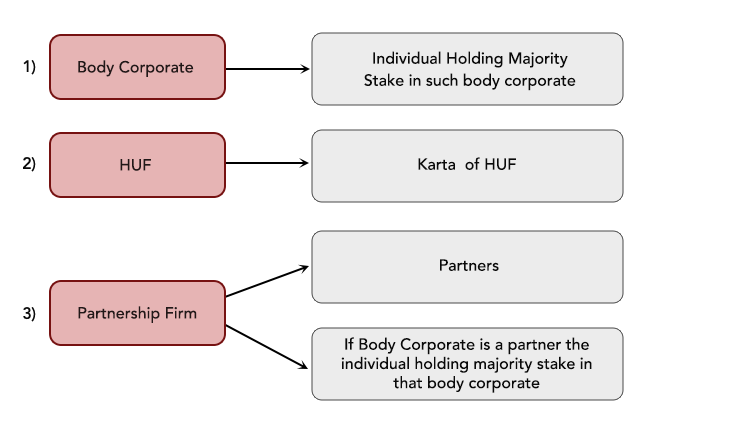
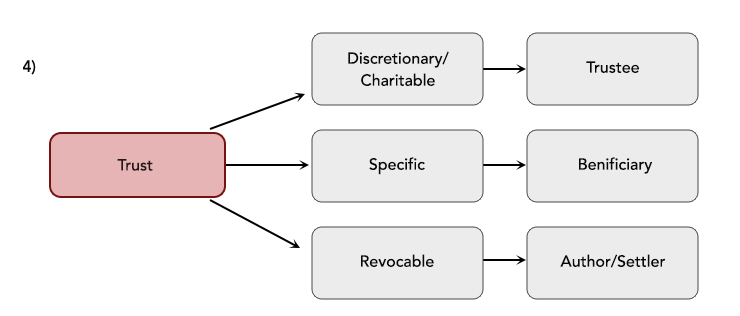
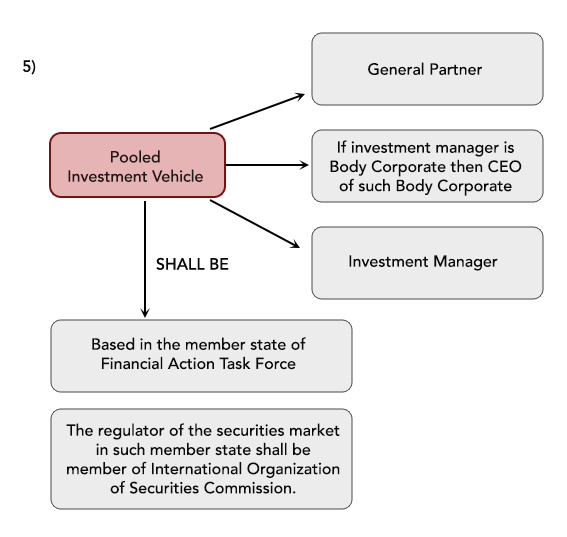
Any individual acting through any other individual, trust or body corporate or any other entity with a common objective of exercising rights, control or significant influence in a reporting LLP through any formal or informal agreement or in any manner shall be deemed to be ‘acting together’.
Holding ‘Majority stake’ means
- owning more than half of the equity shares of a body corporate.
- contributing more than half of the funds in a partnership.
- having more than half of the voting power in a body corporate.
- having the right to receive or participate in more than half of the profits or dividends distributed by the body corporate or partnership.
Non-Applicability [3]
These regulations do not apply under specific circumstances. Such exemptions include instances where the ownership of the reporting Limited Liability Partnership (LLP) is held by:
- Governmental bodies like the Central Government, State Government, or any local authority.
- Entities under the control of governmental bodies, including reporting LLPs, corporate bodies, or entities controlled either wholly or partly by the Central Government, one or more State Governments, or a combination thereof.
- Investment vehicles registered under and regulated by the Securities and Exchange Board of India (SEBI), including mutual funds, alternative investment funds (AIFs),[4] Real Estate Investment Trusts (REITs), and Infrastructure Investment Trusts (InvITs).
- Investment vehicles registered under and regulated by the Reserve Bank of India (RBI), the Insurance Regulatory and Development Authority of India (IRDAI), or the Pension Fund Regulatory and Development Authority (PFRDA).
Steps for identification of SBO:
Step 1: The initial step for reporting LLP is to find out whether there are any non-individual partners in the LLP. If all the partners are individuals and holds rights in such reporting LLP directly then there is no need to look further. Such LLP is neither required to send notice in form LLP BEN 4 nor to file return in form LLP BEN 2.
Step 2: In case there is a partner other than individual then after identifying such individual LLP shall look into the structure of such non-individual partner until the LLP discovers Ultimate individual possessing rights as per the definition mentioned above and shall send a notice in form LLP BEN 4 to disclose his holding and then reporting LLP is supposed to file return with ROC in the form LLP BEN2
According to the LLP (SBO) Rules, every LLP who is required to comply with these rules shall file the necessary forms within 90 days from the commencement of these rules. However according to the recent circular, an extension for such filling is granted to such reporting LLP.
These forms will be available on the MCA portal from 15th April 2024 and reporting LLP shall file all the necessary forms before 15th May 2024.[5]
Take a look at the following illustrations for better understanding.
Illustration: 1
Reporting LLP- ABC LLP
Partners of ABC LLP are :
| Partner | Contribution |
|---|---|
| Mr. D | 30% |
| XYZ Ltd. | 40% |
| Mr. T | 30% |
In the given scenario, among the three partners, Mr. D and Mr. T hold a direct ownership stake of 30% in the reporting LLP thus, they are not required to file the declaration.
XYZ ltd is a body corporate hence LLP shall find the ultimate owner who holds a majority stake in the XYZ ltd.
Shareholding Pattern of XYZ ltd:
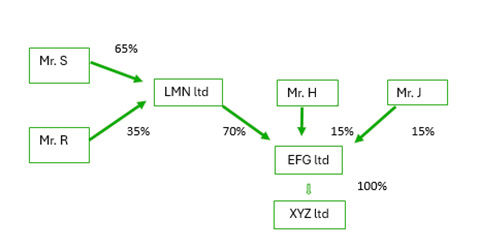
XYZ Ltd is a wholly owned subsidiary of EFG Ltd which comprises of three members, with LMN Ltd holding the majority stake. As LMN Ltd is a body corporate LLP shall further look into the shareholding pattern of LMN ltd.
In LMN ltd Mr. S holds majority stake i.e. 65% shareholding. Hence, he will be identified as SBO of ABC. Thus, ABC LLP shall send notice in form LLP BEN 4 to Mr. S to file declarations in form LLP BEN 1 and on receipt of such declarations, LLP shall file the return in form LLP BEN 2 within 30 days.
Illustration 2
Reporting LLP : PQR LLP
| PQR | Partners | Profit Sharing |
|---|---|---|
| Mr. K | 50% | |
| T Pvt. Ltd. | 50% |
Shareholding Pattern of T Pvt Ltd :
| Member | Share Holding |
|---|---|
| Mr. X | 43% |
| Mr. Y | 37% |
| Mr. Z | 20% |
In this case there are two partners, among them Mr. K holds a direct ownership stake of 50% in the reporting LLP thus, he cannot be identified as SBO of the reporting LLP.
Another partner is T Pvt Ltd which is a body corporate. However none of the member holds majority stake in the company. Hence, it is not required to file the declaration under SBO rules.
Thus, there is no SBO in the PQR LLP.
Conclusion:
In conclusion, the implementation of Significant Beneficial Owner (SBO) regulations marks a crucial step towards enhancing transparency and accountability within Limited Liability Partnerships (LLPs) and corporate structures.
By identifying individuals or entities holding substantial control or ownership interests, these regulations strengthen regulatory oversight, mitigate the risks of illegal financial activities, and promote integrity in business operations. Also, the compliance with SBO rules not only creates trust among stakeholders but reinforces the foundation of a fair and equitable business environment and good corporate governance.
- The article reflects the general work of the authors and the views expressed are personal. No reader should act on any statement contained herein without seeking detailed professional advice.
- Rule 3 of LLP Rules, 2023 – The Limited Liability Partnership (Significant Beneficial Owners) Rules, 2023.
- LLP Rules, 2023 – The Limited Liability Partnership (Significant Beneficial Owners) Rules, 2023
- To understand the concept of AIF click here: YNZ’s article on AIF for big players | YNZ Legal posted on the topic | LinkedIn
- Referred from : Notifications (mca.gov.in)
For any feedback or response on this article, the authors can be reached on cstrainee@ynzgroup.co.in and cstrainee1@ynzgroup.co.in

Author : Sukhada Ballal
Sukhada is a CS traniee at Kalyani Oak and Associates. She is pursuing the professional program of Company Secretary, By qualification, she is Bachelor of Commerce from R. A. Podar College of Commerce and Economics.

Co-Author : Siddhi Gagangras
Siddhi is a CS trainee at Kalyani Oak & Associates. She is pursuing Company Secretary Course. By qualification she is a Bachelor of Commerce from Mumbai University.