
DEMAT: WHAT’S IT ALL ABOUT ?
- Dematerialization (Demat) is the process of converting physical share certificates into electronic form and storing them in a demat account.
- In India, there are two depositories registered with SEBI:
- NSDL (National Securities Depository Ltd.)
- CDSL (Central Depository Services (India) Ltd.)
- Company needs to obtain ISIN from NSDL or CDSL (Depository) to demat its shares.
- A Security holder intending to dematerialise its securities needs to have a Demat account with a Depository Participant (DP).
- A Security holder has to deface and surrender the certificates registered in his name to the DP.
- DP will intimate the same to Depository electronically and send the securities to the concerned Issuer/ Registrar & Transfer (R&T) agent.
- Depository in turn informs the Issuer/ R&T agent electronically about the request for dematerialization from the DP.
- If the Issuer/ R&T agent finds the certificates in order, it will register Depository as the holder of the securities (the Security holder will be the beneficial owner) and communicates to Depository the confirmation of request.
- On receiving such confirmation, Depository credits the securities in the account of the Securityholder’s Demat Account.
DOES DEMAT APPLY TO YOU?
Let’s Discover.
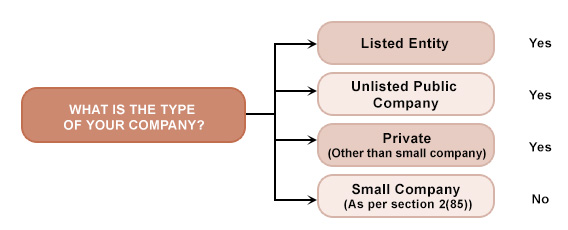
DOES THE COMPANIES ACT CALL YOU A SMALL COMPANY?
Your company qualifies as a ‘small company,’ if it falls under a specific definition stated under Section 2(85) the Companies Act 2013 [2]. Here’s what it means:
- Your company’s paid-up share capital doesn’t exceed ₹4 crore as per the latest audited balance sheets and
- Your company’s turnover, doesn’t exceed ₹40 crore as per latest audited balance sheets.
But remember, this classification doesn’t apply if your company is:
- A holding or subsidiary company, or
- Registered under section 8, or
- Regulated by any Special Act
COMPLIANCE AND DUE DILIGENCE
- According to Rule 9B of the Allotment Rules, any private company that does not qualify as a small company as of March 31, 2023, must ensure that all its shares are converted into demat form by September 30, 2024.
- For all such ‘small company ‘as per the provisions of the Companies Act, 2013, the requirement to demat all their shares would become applicable within 18 (eighteen) months from the end of such financial year in which such company would no longer qualify as a small company.
- The Allotment Rules specify that after the due date of Demat, any new issuance of securities by private companies must be in dematerialised form. Additionally, private companies planning to buy back shares, transfer of shares, issue bonus shares, or conduct a rights issue must ensure that their promoters, directors, and key managerial personnel hold their securities in dematerialised form.
Conclusion:
The mandatory Dematerialization of Shares of Private Company is a significant step forward, promoting transparency and efficiency in share transfers. It offers benefits such as improved financial inclusivity, easier pledge management, reduced fraud, and lower costs, while also simplifying processes for investors and institutions.
- The article reflects the general work of the authors and the views expressed are personal. No reader should act on any statement contained herein without seeking detailed professional advice.
- https://www.mca.gov.in/bin/dms/getdocument?mds=tiMs9IFJ8xuPm%252B%252Foxc6fUw%253D%253D&type=open
For any feedback or response on this article, the authors can be reached on cstrainee1@ynzgroup.co.in and cstrainee@ynzgroup.co.in

Author : Siddhi Gagangras
Siddhi is a CS trainee at Kalyani Oak & Associates. She is pursuing the professional program of Company Secretary, By qualification she is a Bachelor of Commerce from Mumbai University.

Co-Author : Sukhada Ballal
Sukhada is a CS traniee at Kalyani Oak and Associates. She is pursuing the professional program of Company Secretary, By qualification, she is Bachelor of Commerce from R. A. Podar College of Commerce and Economics.